Chinese court sentenced former mayor of Wuhan city to 14 years in prison for bribery
A former Chinese mayor of a central Chinese city plagued by the coronavirus outbreak more than six years ago has been sentenced to 14 years in prison for corruption
A former Chinese mayor of a central Chinese city plagued by the coronavirus outbreak more than six years ago has been sentenced to 14 years in prison for corruption. Zhou Xianwang had previously faced criticism for his handling during the early days of the COVID-19 outbreak in Wuhan, but the court statement did not mention this in its statement Saturday. The court focuses on Zhou's acceptance of bribes, fining him 5 million yuan, or $747,000. The court said Zhou used his various positions between 2003 and 2025, accepting money and valuables worth over $9 million. The court acknowledged his guilty plea and remorse, which led to a reduced sentence.
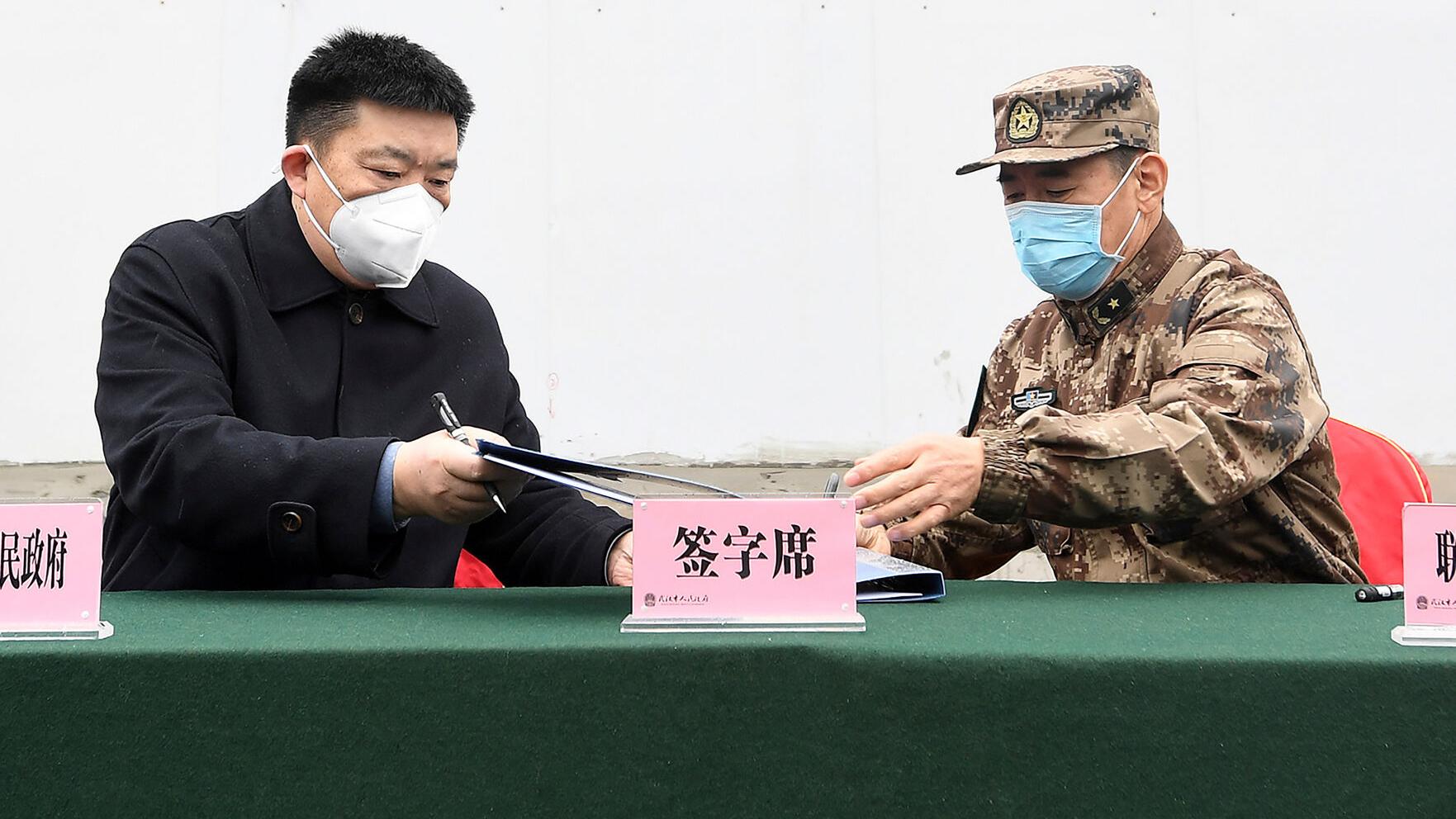
Zhou Xianwang, left, the mayor of Wuhan, exchanges documents with Bai Zhongbin, right, deputy commander-in-chief of China's People's Liberation Army (PLA) Joint Logistic Support Force, during a handover ceremony at the Huoshenshan temporary field hospital in Wuhan in central China's Hubei Province, Feb. 2, 2020.
BEIJING (AP) — A former mayor of a Chinese city hit by the coronavirus outbreak more than six years ago was sentenced Saturday to 14 years in prison after being convicted of bribery.
While Zhou Xianwang has drawn criticism for his handling of the early stages of the outbreak in Wuhan, a city in central China, the court statement did not mention that, but focused on him receiving bribes. The court also fined him 5 million yuan ($747,000).
The Shangqiu Intermediate People's Court said Zhou used his various positions to assist others on matters such as business operations and administrative approvals between 2003 and 2025. He accepted money and valuables totaling more than 60.5 million yuan ($9 million), it said, adding the amount was exceptionally large.
The court decided that his sentence could be reduced because he confessed to his crimes and cooperated with authorities and most of the proceeds were recovered, it said.
Government anti-corruption drives have become a signature policy of Chinese leader Xi Jinping since he came to power in 2012. Thousands of officials have been purged, including high-profile political rivals.
Addressing allegations of Wuhan's failure to disclose information early in the COVID-19 outbreak, Zhou then said that local governments are restricted from releasing information about infectious diseases without authorization.
In December 2019, patients began showing up in Wuhan hospitals complaining of flu-like symptoms, including high fever, cough and breathing difficulties. Soon after, a Chinese lab assembled a near-complete sequence of the virus, showing it to be similar to the coronavirus that caused the 2002-03 SARS outbreak. The lab alerted health authorities, but the information was kept under wraps.
In mid-January, Chinese health officials said in an internal meeting that “clustered cases suggest human-to-human transmission is possible” and ordered emergency preparations for a pandemic. In public, though, they downplayed the virus’s ability to infect.
As infections spread, Wuhan was placed under a 76-day lockdown beginning Jan. 23, 2020.
Copyright 2026 The Associated Press. All rights reserved. This material may not be published, broadcast, rewritten or redistributed without permission.